What does your creative process look like from the initial idea to completion?
When I start with a blank canvas, I never know the outcome, because I build up so many layers.
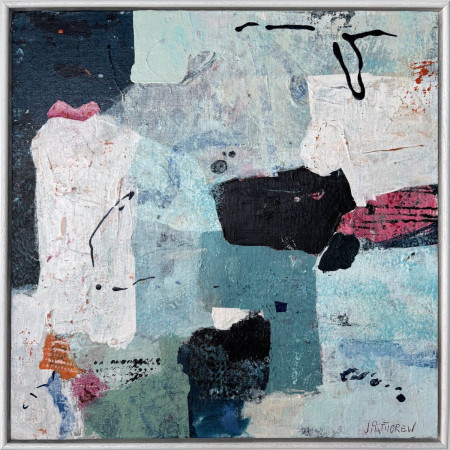
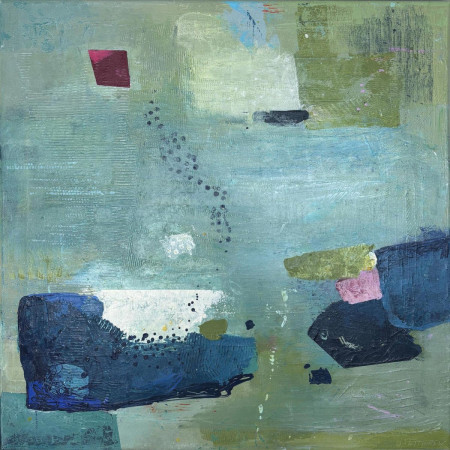
I always start completely free and really push the experimental aspect of my practice, using scrapers, unusual tools and utensils (think potato masher, packaging from the recycling bin, sheet materials etc) to make different marks and create textures by stamping, indenting and transferring the paint. I only occasionally use brushes! Sometimes I glue in fabric pieces, paper collage, or dried palette liners (like baking paper but with my old paint dried in from when I was mixing).
All these layers need to dry, so I move between different canvases all the time, building up textures and changing up compositions.
When I am satisfied with the overall depth atmosphere of a piece, I begin to act with more control, e.g. creating stencils with tape to achieve crisp shapes or individual edges - curating the final composition of shapes: seeking out visual contrast and the ‘perfect’ balance.
Where do you get your inspiration from? What is your work about? What message do you want to convey?
My art practice is rooted in introspection. I am drawn to the theme of dualities in life, and their reconciliation. We spend our lives trying to be one thing or the other - secure or free, stable or spontaneous, structured or emotional.
My art is a celebration of being ‘Both and And’: the language of visual differences I use in my work, like controlled shapes in contrast with intuitive marks, stand for inner landscapes where all our emotions and facets are equally valid. I build surfaces layer by layer - scraping, scarring, and redefining—much like the way our experiences shape us.
Emerging from my architecture background, each of my pieces is a balanced space for contemplation - controlled at first glance, but full of details that reward sustained looking.
What role does art generally play in your life, and which art in particular?
I experience art in different ways. As a ‘consumer’, I like contemporary paintings, ceramics and architecture. These are inspiring uplifting and provide escapism.
As an artist, while creating myself and in the right ‘zone’, I feel free and excited to experiment, and then have the power to curate, edit and shape.
When pieces near completion, I display them around my living space and, often amusing my family in the process, stare at them for ages, trying out in my head the final tweaks I want to make before considering them finished.
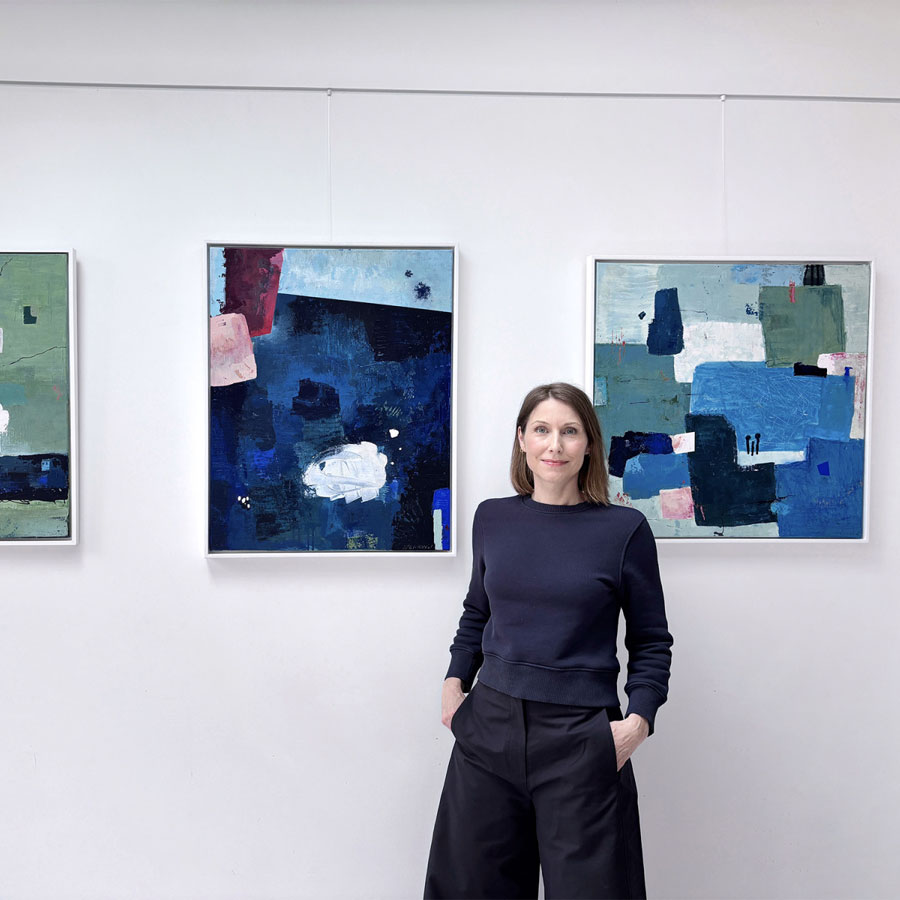
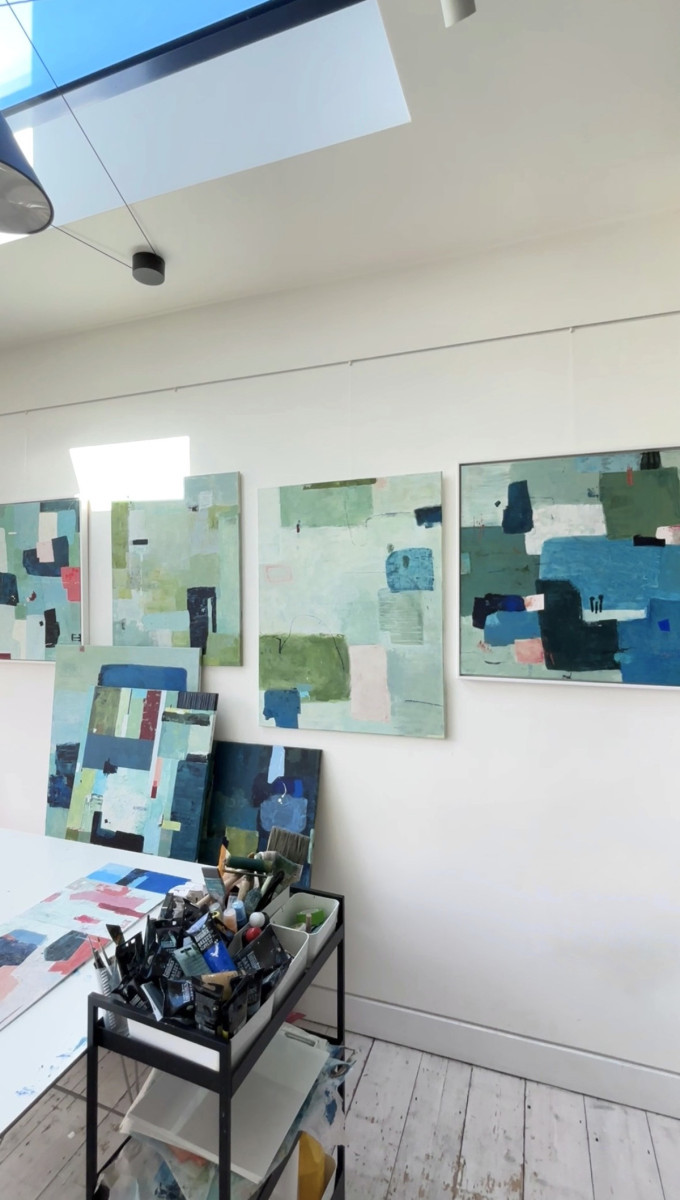 Julika Pettigrew Studio
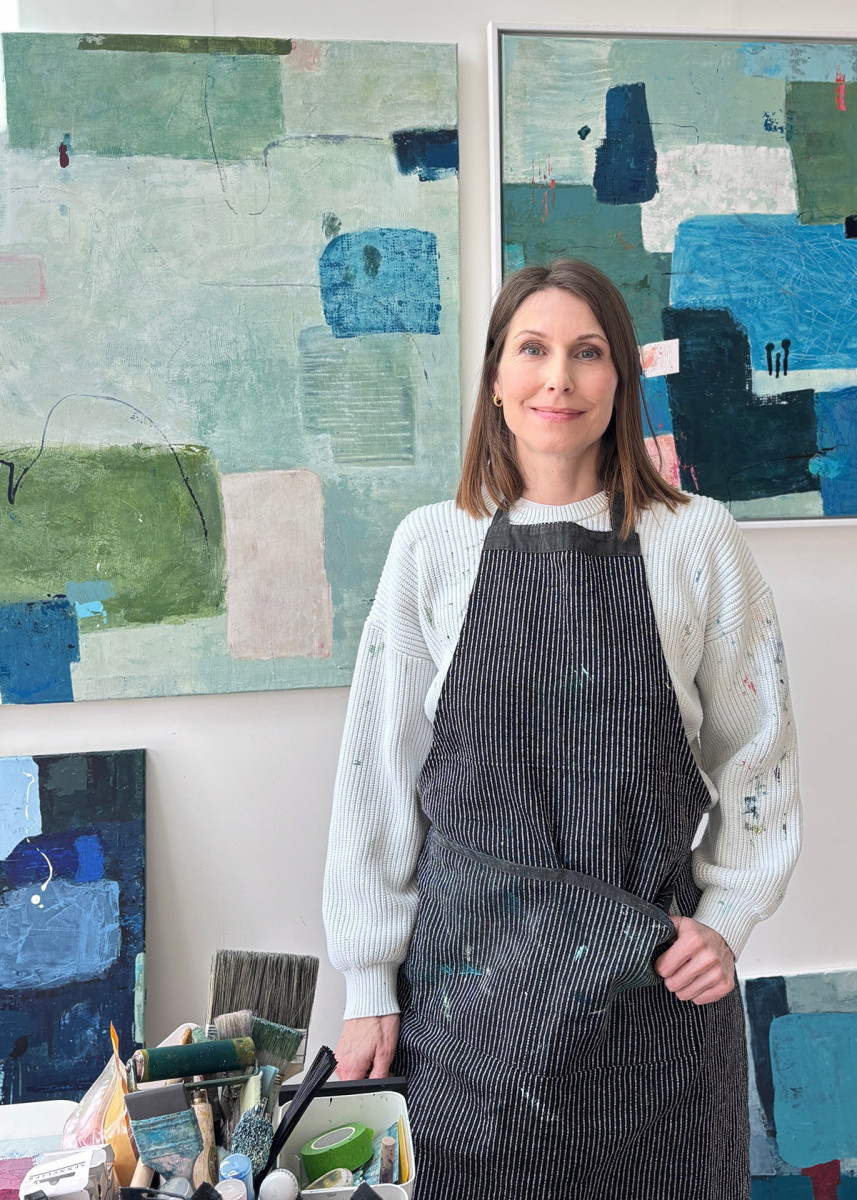 Julika Pettigrew, portrait in studio
What is the most important thing anyone has ever said about a work of art you've created?
Generally, visitors and collectors appreciate the balance, positivity and calming colour palette of my work, and that the pieces never get boring to look at. What meant most to me, though, was the following: Julika is not just making art, but she is archiving the very process of living by layering forms and marks. Her work sits at that beautiful, tension-filled intersection of composition and emotion.
What kind of music do you like to listen to, who is your favorite singer or band and why?
Mostly I work in quiet (with the bird song from the garden in the background), or listen to podcasts. Occasionally, when I choose music, I like classical from the romantic era, the Triumphal March from Verdis Aida gives me goose bumps!
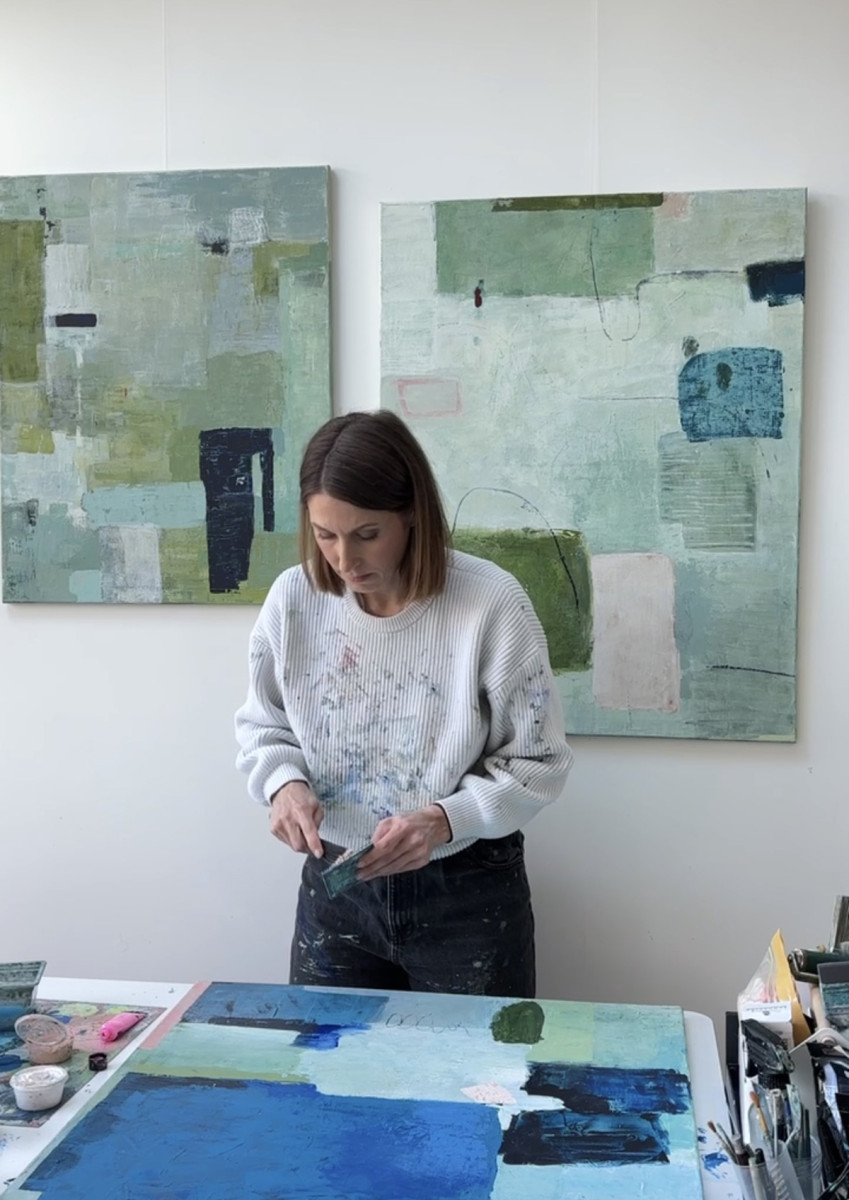 Julika Pettigrew, working in studio
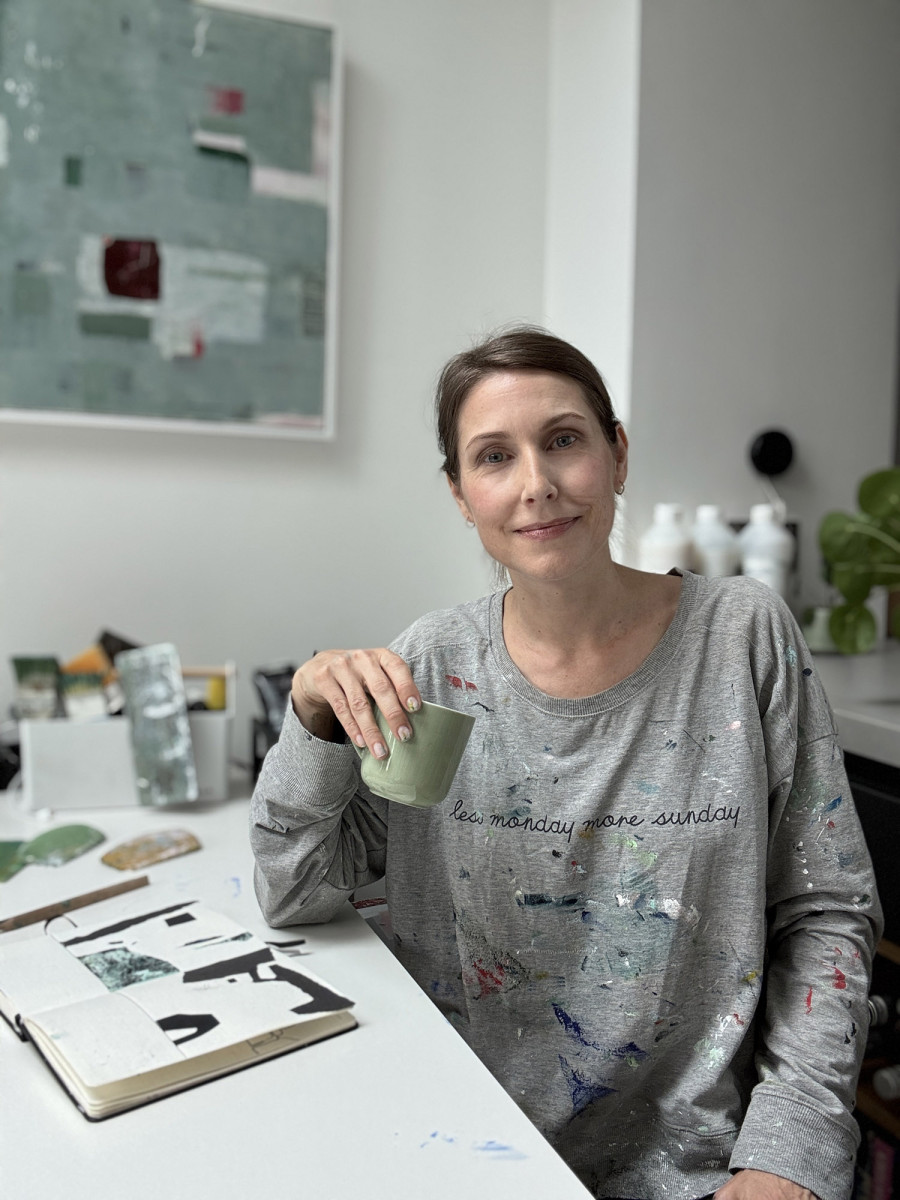 Julika Pettigrew portrait with workbook
What is your personal environment and how does it receive your art?
With a training in interior architecture, large parts of my social circle, and husband, are creatives of some sort and appreciative of my creations of structured chaos. I paint at home, so my children are exposed to my process (and results) and they luckily approve - and get inspired to create as well!
What inspired your art, where do you stand now, and where do you hope to go next?
Ive been creative from an early age and trained in architecture. When I gave that career up, art eventually became my creative outlet. Visually, I am inspired by my surroundings. I live in a capital city but I grew up in the countryside; so shapes found in both urban and natural environments inspire me - therefore, I have two on-going painting series dedicated to them both. For the near future, I think I will be experimenting with a fusion of both!
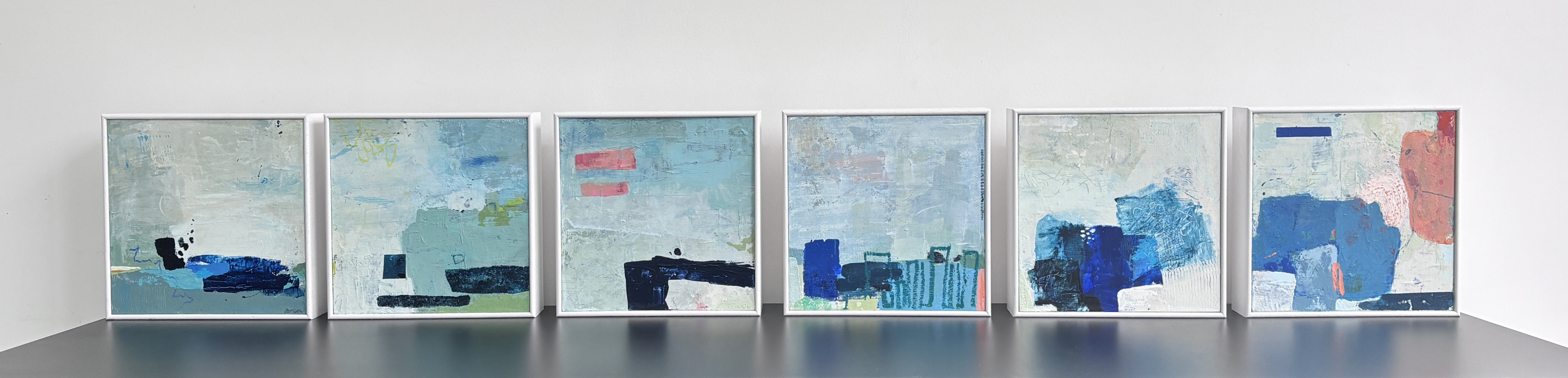 Julika Pettigrew, small works
Tell Me A Story
Painting
Time Flies
Painting
Boulders Memories I
Painting