The colors of the photograph might be slightly different from the original. The price doesn't include any customs fees in your country. Artwork comes with an certificate of authenticity, signed by the artist.
Original artwork description
Between Gravity and the Desire to Fly
from the series The Cycle of Remembrance
acrylic painting on canvas
100 × 100 cm
signed and dated March 2026
varnished, with a white box-type frame
Memory rarely appears as a narrative. Rather, it manifests as fragments, residues, unstable apparitions that drift between presence and disappearance. In The Cycle of Remembrance, Ovidiu Kloska approaches memory not as a simple recollection, but as a living field of tensions — a territory in which matter, sensation, and time continuously negotiate their form.
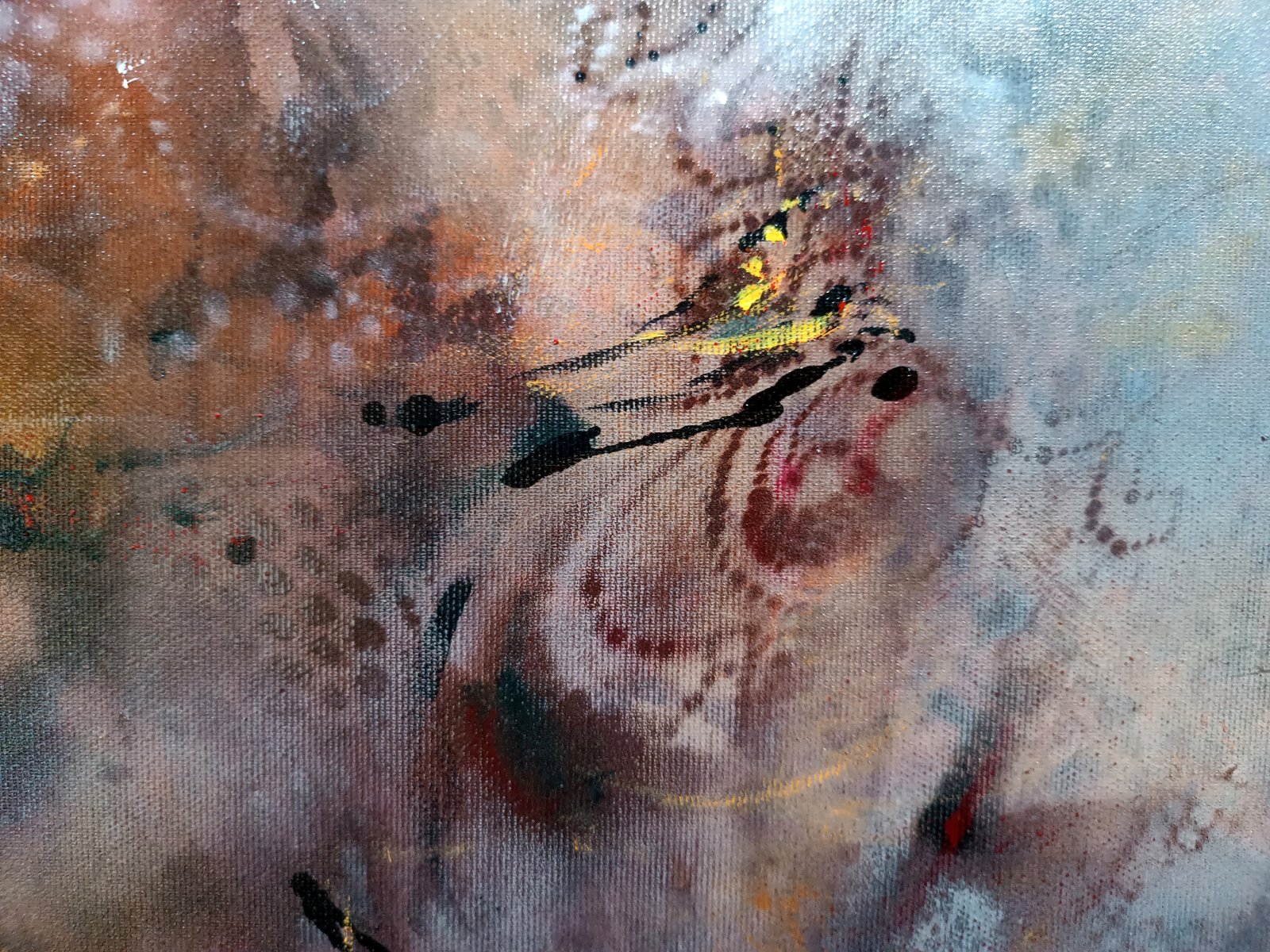
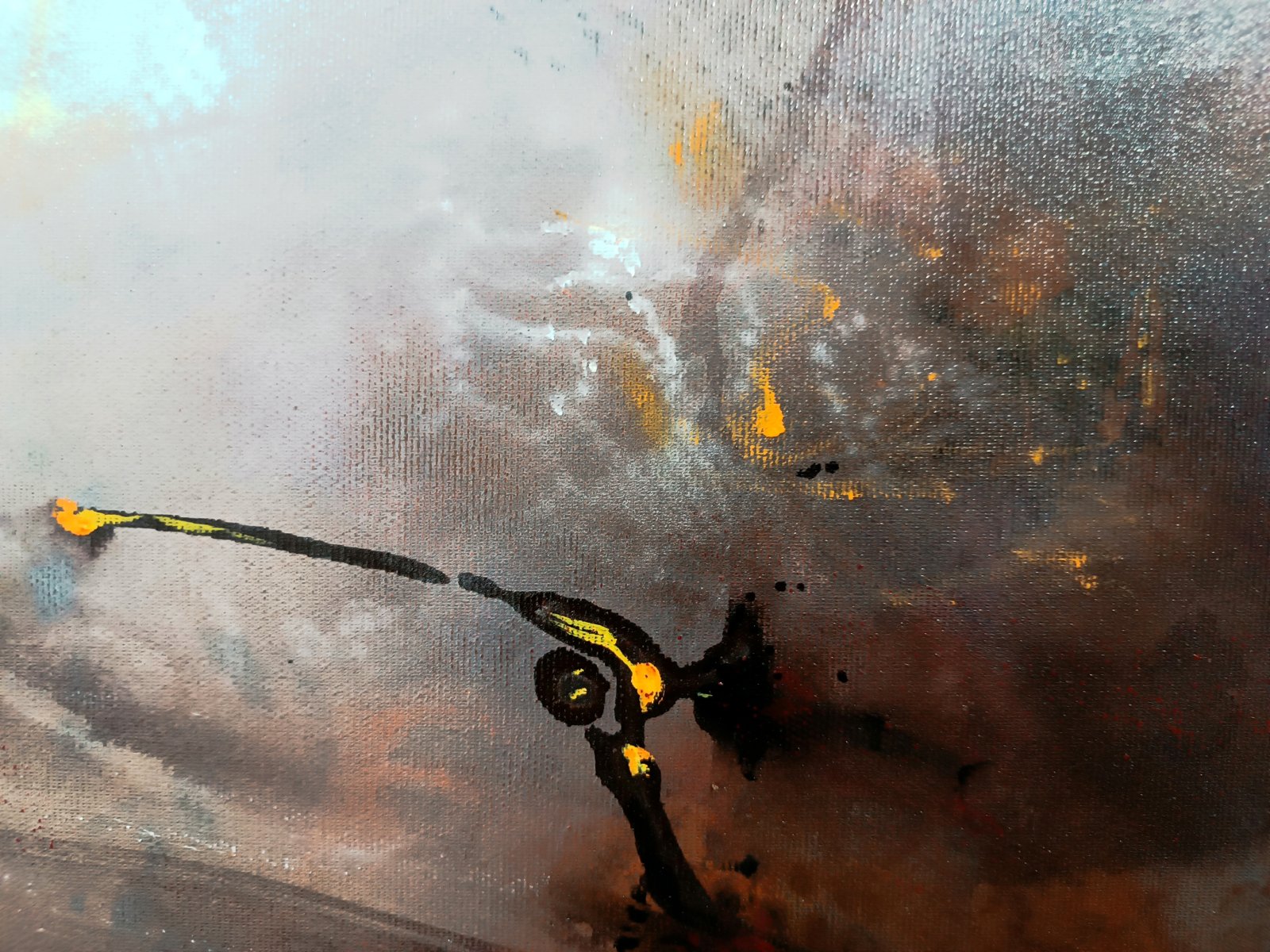
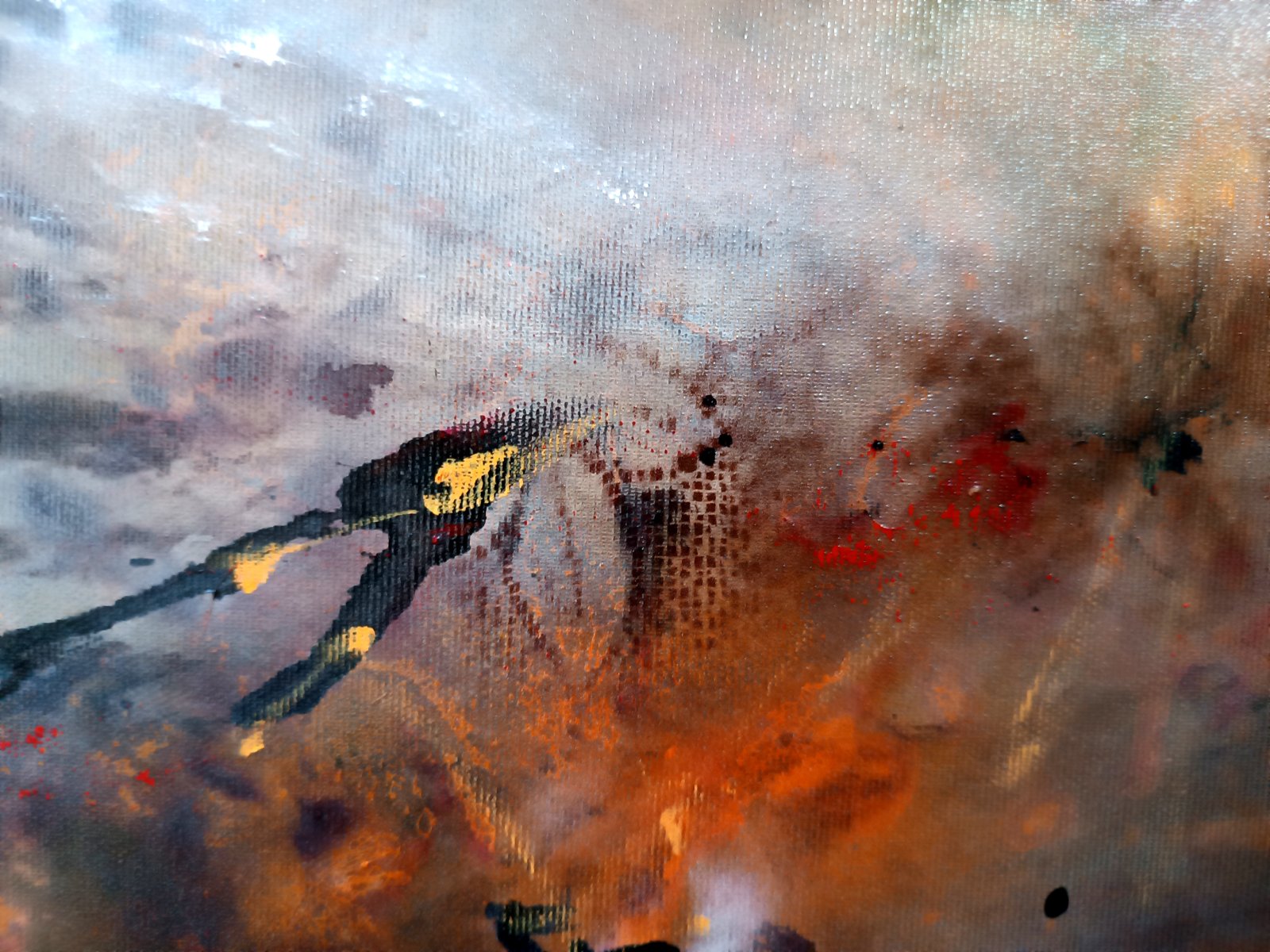
The compositions grow from a central disturbance, a nucleus where gestures accumulate and dissolve. Pigment spreads like smoke, coagulates like sediment, or bursts outward like a sudden combustion. These forms do not describe objects; they evoke states. They recall organisms, relics, or embryonic structures suspended in an atmosphere where gravity and expansion act simultaneously.
In Between Gravity and the Desire to Fly, the image suggests the fragile emergence of wings — or perhaps the memory of wings. A vertical axis anchors the composition, while the lateral extensions unfold as if testing the possibility of flight. Yet the center remains dense, charged with the weight of matter and time. The figure, if it is a figure, appears caught in an intermediate state: neither falling nor ascending, neither fully formed nor completely dissolved.
Throughout the series, Kloska allows painting to behave like the process of remembering itself. Layers are concealed, erased, and reactivated; marks appear as traces of gestures already on the verge of disappearance. Small eruptions of texture — dots, scratches, dispersed pigments — function as micro-archives embedded in the surface, suggesting forgotten languages or biological imprints.
The paintings inhabit a liminal territory between abstraction and emergence. They seem to retain the echo of bodies, vessels, fossils, or fragile organisms emerging from a mist-like environment. What the viewer encounters is less an image and more an event: the moment when something attempts to take form before returning once again to indeterminacy.
In this sense, remembrance becomes an act of resistance against gravity — an attempt to lift fragments of experience into visibility. Yet gravity never disappears entirely. It remains present as density, as sediment, as the persistent pull of time.
The works in The Cycle of Remembrance inhabit precisely this threshold: the suspended space between weight and ascent, between disappearance and emergence — between gravity and the desire to fly.